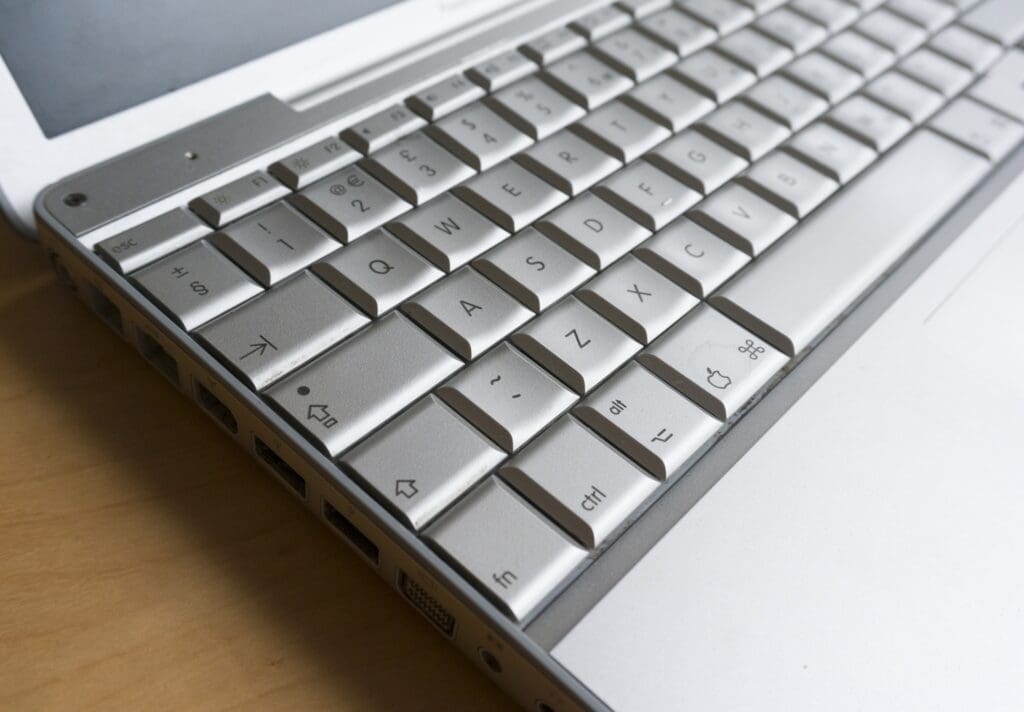
So, I just bought a computer that was released in 2003 on eBay.
In case you aren’t paying attention, the current year is 2026.
You might assume this was about nostalgia. Partially. But there’s more to it than that.
Maybe you’re right. But the people who know me will attest that being out of touch with my feelings is unlikely to be one of my problems.
Instead, I bought this ancient machine (that still boots up, by the way) for more than just nostalgia and therapy avoidance. I did it because, in a very nerdy way, this computer is part of my story.
I did not become an Apple person because of specs or performance. I was drawn to the video work I could do. Or that’s at least how I justified the purchase to my wife.
Despite the extensive video work I did on that machine, I really bought it because I was sold on a story.
Actually, I came to Apple very reluctantly.
After college, in the early 2000s, I was a nerd who was building my own personal computers. I went to computer expos with other uber nerds to buy all the right parts and put them together like an expensive technological LEGO set.
And then, in 2003, I saw the original white Apple iBook. If you are familiar with it, it’s the one that, when it got hot, started smelling like crayons (or something worse). This little white computer with soft, smushy keys did not necessarily perform better than my custom-built tower of greatness.
But something shifted for me the moment I saw it. The world did not change that day, but something in me sure did.
That machine somehow told a story I was ready to hear.
That was the genius of Steve Jobs: his ability to make a consumer product somehow tell a story that I was waiting to hear.
I’m a late Gen Xer who grew up riding Big Wheels in the street, before technology ever fit in our hands — until, suddenly, it started to. Those shifts have shaped my life.
I remember watching my brother write code on a Tandy TRS-80, discovering Coleco Vision, Atari, and NES games, sneaking into the school library to play Oregon Trail, witnessing Prodigy and AOL hint at a coming digital connection. Later in college, I was an early cell phone adopter but hid it so no one would think I was trying to be cool.
None of these experiences was only about the features. Sure, the features were cool. But they were really about permission, access, and being welcomed into a larger story and community.
That’s why that original, white, crayon-smelling iBook mattered so much to me. It wasn’t just a laptop. It was, in some sense, an invitation to be part of a movement. Of course, this movement wasn’t for everyone, and that was the point.
That computer didn’t change the world for everyone, but it did for people like me.
Fast forward a couple of decades and, apparently, I’m the kind of person who spends $125 on a working 12” PowerBook G4 in 2026. Not just because it turned out to be my favorite laptop of all time. And definitely not because it’s still super useful. But I bought it because it’s part of my story and represents a moment when tools were about being part of something greater — and, I’ll admit, a little bit of nostalgia.
That same pattern is at the heart of Liminal’s work with nonprofits.
Too many organizations talk about themselves the way I used to talk about PCs. More features, programs, metrics, outcomes — these are all important things.
But those things focus on what a nonprofit does instead of leading with a compelling story.
Donors do not simply give to features and programs. They give to stories, to belonging, and to being part of something bigger than themselves.
Most people do not donate just because your nonprofit has the most impressive impact reporting — though I strongly recommend having great data!
People donate because something about your story aligns with who they are, or who they hope to become. They want to belong to something. They want to participate in a narrative that feels bigger than a financial transaction.
This is something I explore deeply in my upcoming book, The Welcoming Nonprofit, which is releasing in the spring.
In the book, I make the case that welcoming isn’t about convincing. It’s about the clarity of knowing who you are, what you believe, and communicating why your work matters. When you do that well, the right people experience a meaningful connection. The wrong people feel free to opt out, and both outcomes are healthy. In the book, I describe this as creating relational spaces that meet people where they are — without pressure, manipulation, or urgency-driven tactics.
That original iBook that drew me to Apple didn’t try to win everyone over, and neither should you.
Our job as nonprofit communicators is not to chase every donor, trend, or shiny new opportunity. Our job is to craft a true, authentic, and compelling narrative that makes it possible for the right people, who are ready, to say yes to being part of your story at the right time.
That means accepting the reality that not everyone is ready to say yes. That may feel uncomfortable, but that’s okay.
When the iBook came out, most people didn’t care. It didn’t matter to them because it wasn’t for them. The people who ignored it didn’t make Apple, or the product, a failure. Apple succeeded because they built the machine that their kind of people had been waiting for, even the ones who didn’t know they were waiting for anything.
That’s the work The Welcoming Nonprofit invites organizations into. Not louder messaging and more features. But clearer, more human communication that says, “If this resonates, let’s do this together. If it doesn’t, no hard feelings.”
If your nonprofit messaging makes you feel like you’re shouting into the void, the problem probably isn’t effort. It’s most likely about the story you are telling. Somewhere along the way, features replaced meaning. Optimization replaced narrative. And people stopped feeling like they were invited.
The good news is that this is fixable, and you don’t need to reinvent yourself. You just need to remember who you are and say it clearly. When you do that, the people who have been waiting for exactly the story your organization wants to tell will recognize it instantly.
They’ve been waiting for their iBook. Make sure your messaging says, “This is for you.”
— Todd Hiestand